


Benefits:
1. Rich in Vitamin E
- Naturally rich in vitamin E.
- Vitamin E helps to protect cells from oxidative stress.
- Supports overall nutritional wellness.
2. Supports Heart-Healthy Nutrition
- Naturally contains monounsaturated and polyunsaturated fats.
- Can be included as part of a heart-healthy eating pattern.
- Supports overall cardiovascular wellness as part of a balanced diet.
3. Supports Normal Immune Function
- Naturally provides vitamin E and selenium.
- These nutrients contribute to the normal function of the immune system.
- Supports everyday nutritional wellness.
4. Supports Skin Wellness
- Healthy fats help support normal skin function.
- Supports healthy-looking skin as part of a balanced diet.
5. Supports Normal Brain and Nervous System Function
- Naturally contains vitamin B6 and magnesium.
- These nutrients contribute to normal nervous system function.
- Provides plant-based protein and healthy fats for everyday nutrition.
6. Source of Dietary Fiber
- Naturally contains dietary fiber.
- Fiber supports normal digestive function.
- Helps contribute to daily fiber intake.
7. Rich in Essential Minerals
- Naturally contains magnesium, selenium, phosphorus, copper, zinc, and iron.
- These minerals contribute to normal body functions.
- Supports daily nutritional intake.
How To Use:
1. Eat as a Snack
- Enjoy 1–2 tablespoons (approximately 15–30g) daily.
2. Add to Breakfast
- Sprinkle over oatmeal, cereal, yogurt, or smoothie bowls.
3. Add to Meals
- Mix into salads, rice bowls, soups, or cooked vegetables.
4. Use in Baking
- Add to bread, muffins, cookies, granola, or homemade energy bars.
5. Make Sunflower Seed Butter
- Blend roasted sunflower seeds until smooth.
- Add a pinch of salt if desired.
6. Trail Mix
- Mix with nuts, dried fruits, and other seeds for a healthy snack.
Advantages:
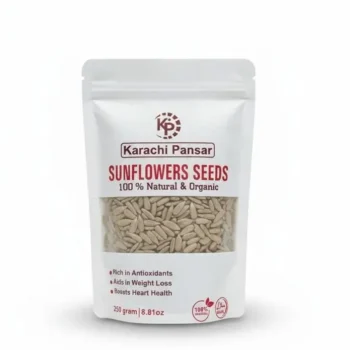
- 100% natural sunflower seeds.
- Naturally rich in vitamin E, plant-based protein, dietary fiber, and healthy fats.
- Easy to add to snacks, breakfast, salads, and baked foods.
- Suitable for everyday nutritional support.
- Hygienically packed to help maintain freshness and quality.
Precautions:
- Consume as part of a balanced diet.
- Individuals with seed allergies should avoid use.
- Consume in moderation as seeds are naturally calorie-dense.
- Store in a cool, dry place away from direct sunlight.
- Reseal the pack tightly after opening.
- Keep out of reach of children.

Reviews
There are no reviews yet.