
Benefits:
1. Supports Digestive Health
- Provides dietary fiber that supports normal digestion.
- Helps maintain regular bowel movements.
2. Supports Eye Health
- Provides beta-carotene, which the body can convert into vitamin A.
- Vitamin A supports normal vision and eye health.
3. Supports Heart Health
- Provides potassium, which supports normal heart and muscle function.
- Fiber can be part of a heart-friendly diet.
4. Supports Iron Intake
- Provides iron, which helps the body make hemoglobin.
- Supports normal oxygen transport throughout the body.
5. Supports Bone Health
- Provides minerals such as potassium and small amounts of calcium and magnesium.
- Supports normal bone health as part of a balanced diet.
6. Supports Skin Health
- Provides beta-carotene and other antioxidant compounds.
- Supports normal skin health and protection from oxidative stress.
7. Supports Daily Energy
- Natural carbohydrates provide energy for daily activities.
- Makes a convenient and nutritious snack.
How To Use:
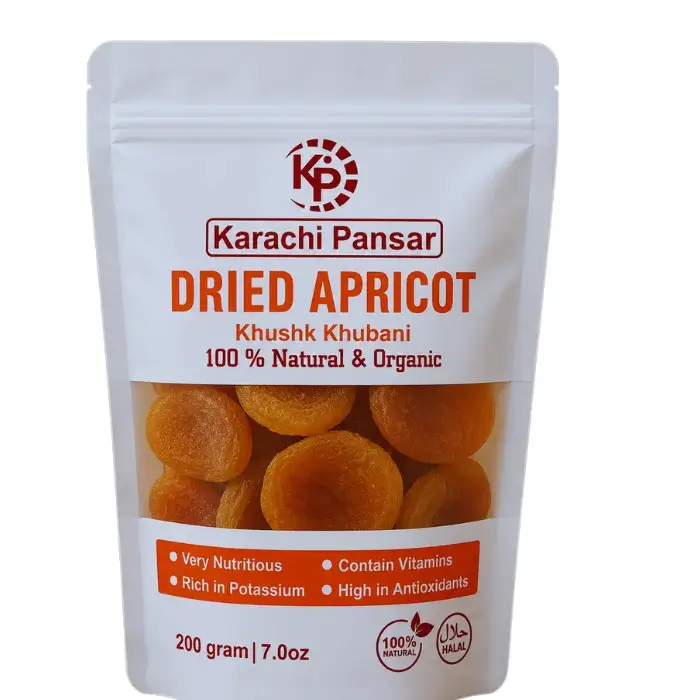
- Eat 4–6 dried apricots (about 30–40g) as a snack.
- Add chopped dried apricots to oatmeal, cereal, yogurt, or desserts.
- You can soak them in water before eating if you prefer a softer texture.
- Rinse before eating if needed.
- Enjoy in moderate amounts because dried apricots contain concentrated natural sugars.
Advantages:
- Naturally sweet dried fruit.
- Provides dietary fiber.
- Contains potassium, iron, copper, and vitamin A-related nutrients.
- Easy to eat as a snack.
- Convenient to add to meals and recipes.
- Convenient 200g pack.
Precautions:
- Dried apricots contain natural sugars, so people with diabetes should control portion size.
- Eating large amounts may cause bloating or digestive discomfort.
- People with sulfite sensitivity should be careful when consuming dried apricots.
- People with a known apricot allergy should avoid them.
- Store in a cool, dry place away from moisture and direct sunlight.
- Keep away from children.

Reviews
There are no reviews yet.